Why Great Cities Think in Decades


Kate Thompson
President & CEO
By Kate Thompson, President & CEO, Calgary Municipal Land Corporation
Cities are constantly changing. Populations grow, economies shift, neighbourhoods evolve, new priorities emerge.
The decisions we make about how our cities grow must respond to these changing realities. The most consequential city-building decisions consider what a city will need 10, 20, even 50 years from now.
That’s one of the great challenges of city-building. The timelines required to achieve meaningful transformation seldom align neatly with annual budgets or market conditions. And the benefits of decisions made today may not be fully realized for a generation.
In my experience, the most impactful and meaningful influences that create vibrant and economically resilient communities are when we take the long view.
City-building isn’t a series of isolated projects but a continuous process of investment, partnership and stewardship. A process that starts with a compelling vision supported by practical strategies for delivering it. And perhaps most important, the commitment to long-term goals with the flexibility to respond to changing circumstances.
With nearly two decades of city-building successes, CMLC has reinforced my belief in the importance of this long-term perspective.
A vision worth committing to
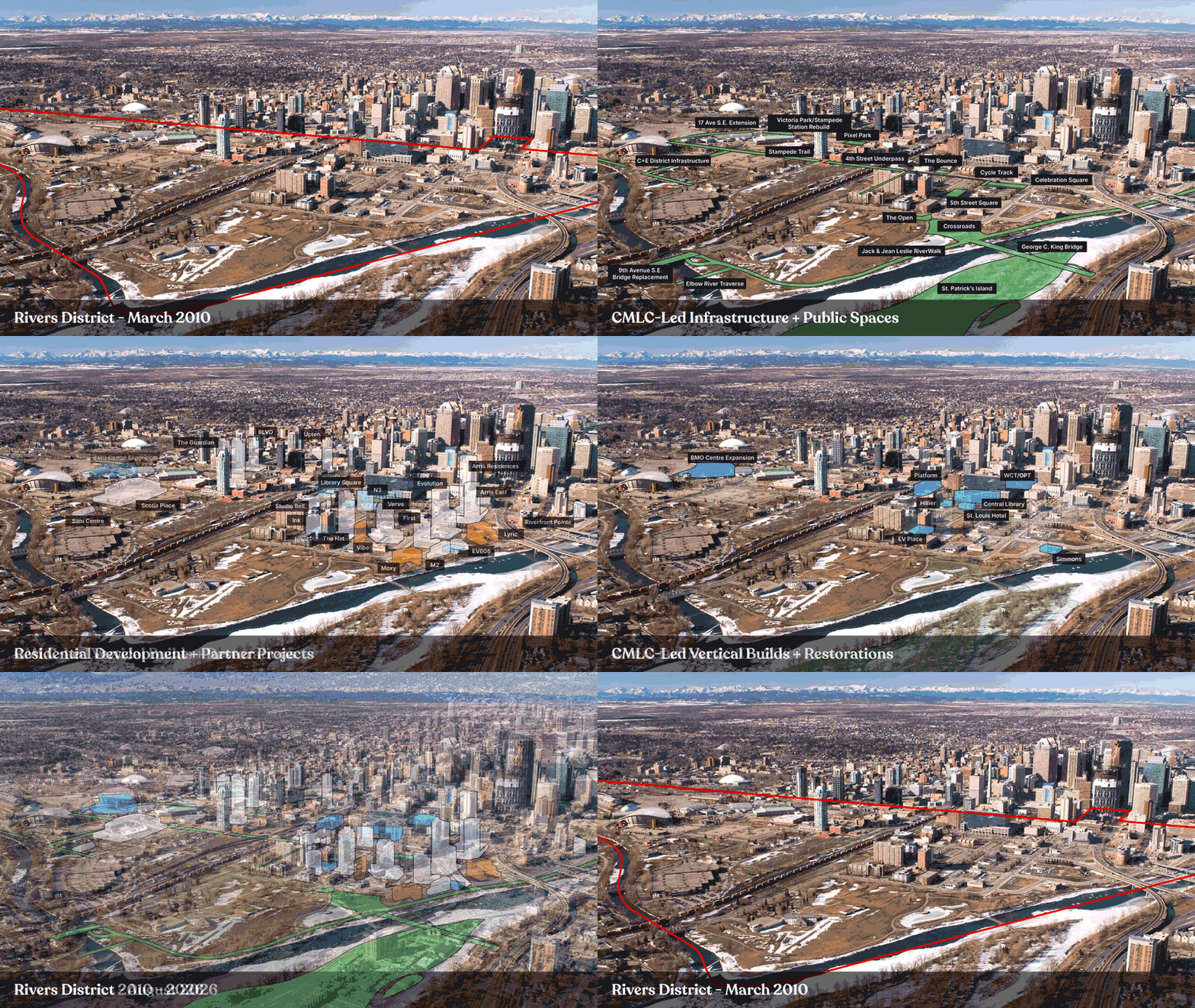
When CMLC was established in 2007 to lead the revitalization of Calgary’s Rivers District, East Village was a very different place from the neighbourhood we know today.
Transforming it into a vibrant, mixed-use urban community required much more than a collection of new buildings. It demanded a comprehensive vision for how the neighbourhood could function, how people would experience it, and how public and private investment could work together to realize its potential.
The East Village Master Plan provided that foundation.
It established a shared direction for the neighbourhood, bringing together infrastructure, public spaces, cultural amenities and establishing the confidence to attract private development partners willing to invest in a place whose transformation would unfold over decades.
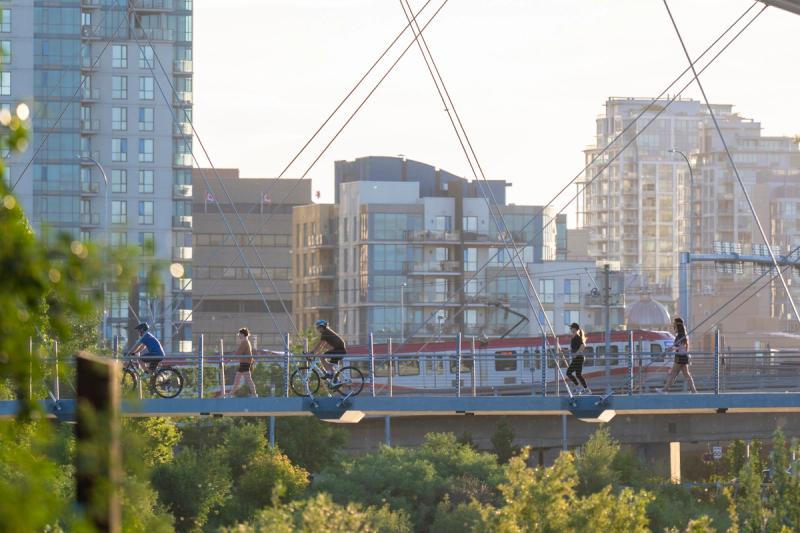
Today, East Village is home to thousands of new residents, award-winning public spaces, landmark destinations like the Central Library and the National Music Centre that have fundamentally changed how Calgarians experience this part of their city.
The transformation, though, is far from finished. New residential and mixed-use developments continue to advance, and our work to maintain, animate and enhance the neighbourhood remains essential.
This is an important lesson in long-term city-building: a master plan isn’t simply a blueprint for development. It’s a commitment to a future that takes time, investment and sustained effort to achieve.
Planning for change—and certainty
Of course, thinking in decades presents a paradox: we need long-term plans to establish a clear direction, but we also know the conditions under which those plans were developed will change.
Economic cycles, construction costs, demographic trends, housing preferences and emerging technologies can all influence how communities grow and how plans are ultimately delivered.
As such, a successful master plan must be both ambitious and adaptable.
In Calgary’s Culture + Entertainment District, the Rivers District Master Plan provides a framework for creating a vibrant, mixed-use destination anchored by major cultural, entertainment and convention facilities.

This vision has guided substantial public investment in infrastructure and catalytic projects, it has also helped create the conditions for significant private investment.In 2025, for example, three hotel developments were announced in the district, representing approximately $1.47 billion in planned private investment.
Each investment advances a larger vision, creating opportunities for subsequent investments and helping the district evolve into a more complete urban neighbourhood.
And as market conditions change, so must our approach to implementation.
The objective isn’t to preserve every detail of an original plan. It’s to preserve the integrity of the vision while adapting the strategies, partnerships and sequencing required to deliver it.
Long-term thinking should provide continuity of purpose, not rigidity of process.
The value of patient investment
One of the defining characteristics of transformational city-building is that public investment typically needs to come before private investment.
Roads, utilities, flood protection, transit connections, parks and public spaces are fundamental to creating successful urban communities. Yet these investments can be expensive and complex when viewed solely through the lens of immediate financial returns.
Their value is often realized incrementally, as private development occurs, businesses open, residents arrive and economic activity grows.
This is where the concept of patient capital becomes especially important.
In city-building, patient capital is about recognizing that certain investments must be evaluated over longer horizons. It means accepting that the returns on public investment may take many forms—and many years to materialize.
Some outcomes are financial: increased property values, expanded assessment bases, new private investment. Others are social, cultural or environmental: more accessible public spaces, improved mobility, stronger communities and a better quality of urban life.
So, the question isn’t simply whether an investment will generate an immediate return. It’s whether that investment will create lasting value and help unlock opportunities that might otherwise remain unrealized.
Connecting vision with financial strategy
A compelling master plan can establish where a city wants to go. But delivering that vision requires a financial strategy capable of supporting investment over time.
In Calgary’s Rivers District, the Community Revitalization Levy has been a profoundly important part of that equation.
The CRL enables incremental property tax revenue generated through redevelopment within a designated area to support ongoing revitalization investments. In practical terms, it provides a mechanism for aligning upfront public investment with the longer-term economic growth that investment is intended to help stimulate.
The relationship between planning and financing is particularly important because neither is sufficient on its own. When the financial tools, investment strategy and master-planning vision work effectively together, public investment can serve as a catalyst rather than simply a cost, creating the conditions for private capital, community participation and further development to follow.
Applying long-term lessons to emerging opportunities
As we begin planning transit-oriented communities along Calgary’s Red Line LRT network, we’re drawing on lessons shaped through nearly two decades of city-building experience. While every community is unique, the fundamentals remain remarkably consistent: establish a clear vision, invest strategically to remove barriers, attract private investment and build with future generations in mind.
At Dalhousie, Anderson and Fish Creek–Lacombe stations, underutilized City-owned lands present opportunities to create more complete, connected communities that integrate housing, transit, services and public amenities.
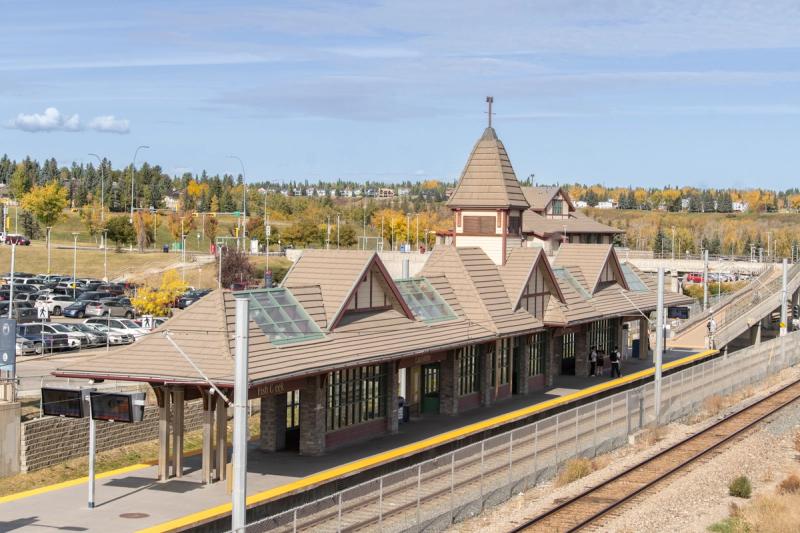
While our immediate focus is on understanding these sites and establishing thoughtful planning frameworks, our larger ambition is to create the conditions for enduring, responsive communities that serve Calgarians for generations, guided by vision, flexibility and financial discipline.
Building beyond the present
City-building is ultimately an exercise in optimism. It asks us to imagine a better future and make decisions today that will enable it to happen..
But optimism alone isn’t enough.
Transformational change requires the discipline to establish clear goals, the patience to see complex initiatives through, the flexibility to navigate uncertainty and the commitment to remain accountable for the results.
It also requires continuity. Economic conditions will fluctuate. Community needs and expectations will evolve. Successful city-building must be resilient enough to accommodate both.
Looking back on the nearly 20 years that CMLC has been helping to shape Calgary’s urban landscape, I recognize that some of our most important achievements began with decisions whose full value wasn’t immediately apparent.
Master plans. Infrastructure investments. New partnerships. Commitments to public spaces that would take time to reach their full potential.
Individually, these decisions may seem incremental. Collectively, and over time, they can transform a city.
Great cities don’t happen by accident. They’re built by people willing to think beyond the present and invest in a future they may not be around to see fully realized.