CMLC's Approach to Transit-Oriented Community Planning
- Part 2 of the Transit-Oriented Communities by CMLC Education Series.
- How CMLC’s experience in master planning and city-building is shaping its approach to transit-oriented community development across Calgary.
- The planning frameworks, partnerships and decision-making principles that guide the delivery of successful transit-oriented communities.
- Why design quality, infrastructure investment and long-term thinking are critical to creating connected, people-focused communities around transit.
- How CMLC works to balance vision, market realities and community integration while advancing transit-oriented development along Calgary’s Red Line.
Delivering a successful transit-oriented community requires more than a strong concept. It demands coordination, experience and a clear framework for decision-making.
For Calgary Municipal Land Corporation (CMLC), transit-oriented community development represents a natural extension of our core expertise: master planning, city-building and delivering complex projects through partnerships.
Building on a proven model
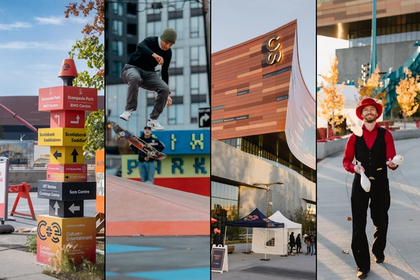
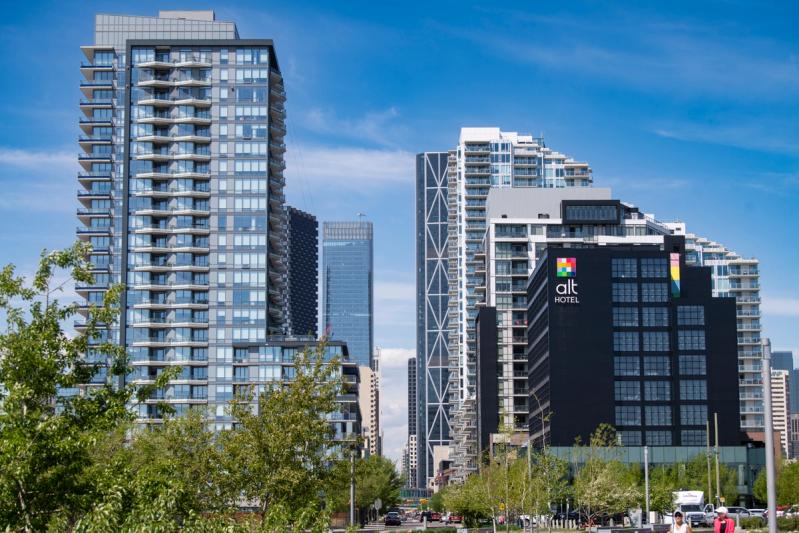
Over the past two decades, CMLC has played a central role in shaping Calgary’s Rivers District, transforming underutilized land in East Village and East Victoria Park into vibrant, mixed-use neighbourhoods.
“In our nearly 20-year history, we’ve overseen the delivery of master plans for East Village and The Culture + Entertainment District, stewarding public investment in infrastructure and public spaces, and then working with private industry to deliver the residential and mixed-use developments that bring people into our communities,” says Jessie Boyle, Program Director with CMLC leading the TOC at Dalhousie.
That experience translates directly to TOC development.
Like the neighbourhoods in the Rivers District, TOC sites involve multiple stakeholders, significant infrastructure considerations and long-term planning horizons. They require a disciplined, coordinated approach that balances vision with feasibility.
Partnership with The City of Calgary
CMLC’s role in TOC development is closely tied to our relationship with The City of Calgary.
Working together, we’re advancing development on City-owned lands in support of broader housing and urban development objectives. This includes aligning with The City’s housing strategy and transit-oriented development policies.
This partnership allows for a more integrated approach—one that brings together planning, infrastructure, approvals and market considerations within a shared framework.
“CMLC’s approach to community-building is all about partnership,” says Jessie.
A corridor approach
A Rather than focusing on a single site, CMLC is advancing a portfolio of TOC opportunities along Calgary’s LRT Red Line, including Dalhousie, Fish Creek–Lacombe and Anderson.
This approach provides flexibility. It allows us to respond to market conditions, prioritize sites based on readiness, and coordinate development over time.
It also enables a more strategic allocation of resources, ensuring that each project benefits from shared insights and efficiencies.
Planning principles that guide decision-making
CMLC’s work in TOC development is guided by a set of planning principles that reflect both our organizational strengths and our broader city-building mandate.
These include:
- Deliver strategic mixed-use development at transit stations
- Enable multi-modal connectivity
- Facilitate placemaking and public realm activation
- Drive economic value
- Enable equity and affordability
- Support long-term sustainability
These principles are not theoretical. They shape how decisions are made at every stage of the planning process.
What’s important is that there’s flexibility to respond to each site.
As David White of CivicWorks, the planning team supporting CMLC’s TOC at Fish Creek-Lacombe, notes, “The transit-oriented community network presents real opportunity for thoughtful growth—but of different types depending on the context. Not all transit-oriented community contexts are going to be the same. We need to be responsive in how we connect, integrate and complement what’s already there.
From vision to framework
A key component of CMLC’s approach is the development of a comprehensive planning framework for each TOC.
This includes:
- A master plan that defines land use, density and overall structure
- Design guidelines that shape the look and feel of development
- Infrastructure strategies that support connectivity and services
- Phasing plans that guide how the community evolves over time
Together, these elements provide clarity—for stakeholders, for development partners and for the community.
The framework is what turns vision into something real, giving everyone a shared understanding of where the project is going and how it will get there.
CIMA+ B&A’s Chris Andrews, who leads the planning team supporting CMLC’s TOC at Dalhousie, sums it up: “It really gives the community, The City and interest holders a solid understanding that a lot has gone into this. We can consistently reference the guidelines and understand how TOCs are being planned across the city.”
Design matters
While planning frameworks establish structure, design is what shapes experience.
CMLC places a strong emphasis on design quality in TOC development, ensuring that buildings, public spaces and connections work together to create cohesive, human-scaled environments.
This includes attention to:
- Streets and pedestrian connections
- Public spaces and open areas
- Building form and massing
- Integration with surrounding communities.
The goal is not simply to enable growth, but to do so in a way that enhances the character, functionality and liveability of each site.
This aligns with the broader intent of our Development Framework: to create “connected, walkable, people-focused communities where residents can live, work and play.”
Removing barriers, enabling development
One of CMLC’s key roles is to remove barriers that might otherwise limit development.
This can include:
- Coordinating with The City on approvals
- Addressing infrastructure challenges
- Aligning stakeholders and partners
- Creating conditions that attract private investment.
By taking on this enabling role, CMLC helps create a more predictable and viable environment for development, and one that ensures alignment and integration with the surrounding communities.
CMLC’s job, in essence, is to set the stage—to do the upfront work that makes it possible for others to come in and deliver projects that align with the vision.
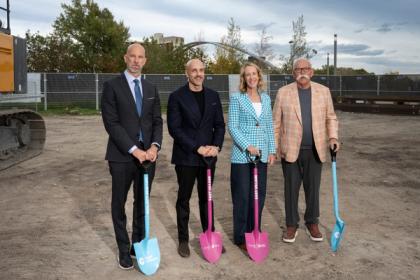
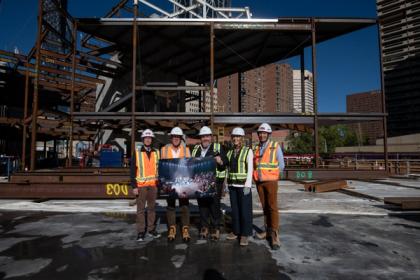
“Once the master plan is approved,” says Jessie, “we prepare the site. We make necessary infrastructure and public realm improvements and engage private industry to deliver development aligned with the master plan.”
Balancing vision and market reality
While long-term vision is essential, successful TOC planning must also respond to market conditions.
CMLC’s approach integrates market analysis into the planning process, ensuring that proposed development is both desirable and achievable.
That balance is crucial. A plan that’s too rigid may struggle to adapt. One that’s too flexible may lack direction.
The goal is a framework that’s clear and adaptable—one that can evolve as conditions change while maintaining line of sight on a consistent vision.
“Any TOC needs to think about the market and context dynamics—what options exist, but also what services and amenities are needed or missing—and how we build on that to support both current and future residents,” says David.
A long-term commitment
A Transit-oriented communities are not built overnight. They evolve over years, often decades.
CMLC’s approach reflects this long-term perspective, focusing not just on initial development, but on how each community will grow and mature over time.
This includes:
- Sequencing development to support early success
- Investing in infrastructure and public spaces
- Maintaining design quality throughout
- Continuing to engage with the community until completion and beyond.
Moving forward
As we advance our TOC portfolio, our approach is grounded in experience, guided by clear principles and shaped through collaboration.
The objective is straightforward: to create well-planned, well-designed communities that respond to Calgary’s housing needs while strengthening the places people already call home.