What is a Transit-Oriented Community?
- Part 1 of the Transit-Oriented Communities by CMLC Education Series.
- Exploring the planning principles, design considerations and community-building strategies that shape complete communities around transit.
- How housing, mobility, public space and infrastructure work together within a thoughtfully planned TOC.
- Why transit-oriented communities are increasingly seen as part of Calgary’s long-term growth strategy.
- What are the broader opportunities, challenges and misconceptions surrounding transit-oriented development.
Across Calgary, conversations about growth, housing and mobility are increasingly converging around a key opportunity: building more complete communities around transit.
Transit-oriented communities—often referred to as TOCs—are not a new concept. But in a city experiencing rapid population growth and rising demand for housing, they’re gaining traction as a practical, long-term response to some of Calgary’s most pressing challenges.
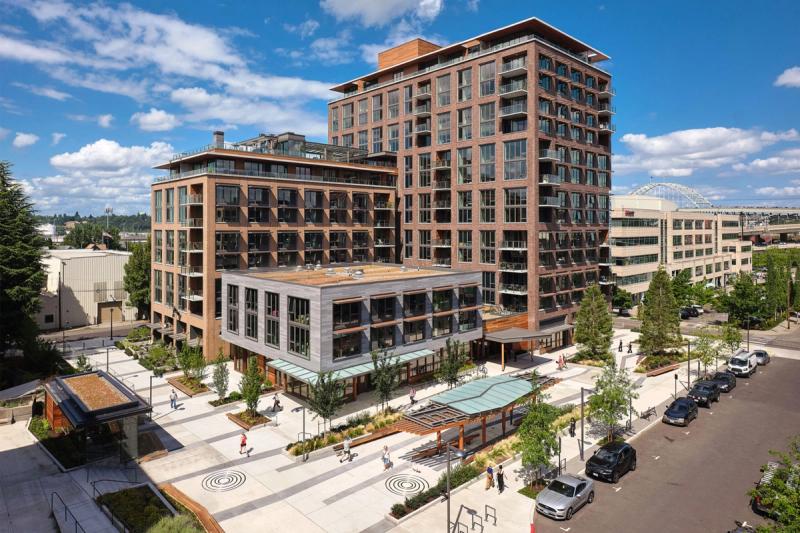
At its core, a TOC is a simple idea, thoughtfully applied: bring homes, shops, services and public spaces together within easy walking distance of frequent transit.
Behind this simple definition, though, is a complex process of planning, design and community engagement that shapes how these communities evolve.
A more complete way to grow
A successful transit-oriented community is far more than a collection of buildings near an LRT station. It’s a deliberate approach to city-building that prioritizes access, liveability and how people move through their days.
In a TOC, more of daily life happens close to home. Groceries, cafés, childcare, parks and transit are all within reach. Getting around doesn’t always mean getting in a car. And a range of housing types creates opportunities for more Calgarians to live in well-connected neighbourhoods.
“Transit-oriented communities create clusters of homes, services and amenities—complete communities—that allow people to work and play close to home,” explains Nathan Flach, CMLC’s Director of Design.
That sense of completeness is what sets TOCs apart. By integrating homes, retail, services and public spaces—and designing them to work together—they create places that are efficient, accessible and genuinely liveable.
Responding to Calgary’s housing needs
Calgary is growing, and Calgarians are feeling the effects of that growth in real time. As the demand for housing rises, so too do the pressures on where and how the city expands.
Transit-oriented communities are one way to respond.
As Chris Andrew of CIMA+ B&A, the planning team supporting CMLC’s TOC at Dalhousie, notes, “Calgary has done a good job accommodating growth through new suburbs—but that can’t be the only way. One of the other opportunities is taking underutilized sites and planning them comprehensively to accommodate growth.”
By focusing development on underutilized land near existing transit, TOCs make more efficient use of land and infrastructure. They add housing in places that are already connected, reducing pressure to push growth further outward.
This is where location matters most.
“These are city-owned lands that are precious in scope and scale—and in their proximity to transit,” says David White of CivicWorks, the planning team supporting CMLC’s TOC at Fish Creek-Lacombe. “Delivering diverse housing options in these parts of established communities is critical to achieving the goals of the City’s housing strategy.”
After all, an intelligent housing strategy isn’t about building everywhere. It’s about building in the right places.
What makes a TOC successful?
Not every development near transit becomes a successful TOC. The difference lies in how intentionally the community is planned—and how well its pieces work together.
At a high level, successful TOCs share a few defining qualities:
- Connected and easy to navigate
Transit is close at hand. And just as important, getting to and from it feels natural. Safe, intuitive connections link homes, stations and surrounding neighbourhoods.
- Mixed and active throughout the day
A purposeful blend of homes, shops, services and workplaces creates a steady rhythm of activity—morning to evening, weekday to weekend.
- Designed for people
Density matters, but design matters more. Streets, buildings and public spaces are shaped at a human scale, creating places that feel comfortable, inviting and easy to move through.
- Flexible and inclusive housing options
A range of housing types allows more people—at different stages of life—to live in well-connected areas.
- Strong public spaces
Parks, plazas and open spaces provide room to gather, pause and connect, helping to nurture a sense of community.
These elements don’t stand alone. They reinforce one another. When they align, the result is a community that functions well and feels natural
“It’s not just about density,” says Chris Andrew. “It’s about creating a community within a community—a central core next to transit. Parks, connections and amenity spaces are all critical, as well as housing.”
Beyond transit: shaping better communities
While transit is the defining feature of a TOC, the broader ambition is about how a city grows—and how people experience that growth day to day.
By concentrating growth in well-connected areas, TOCs do more than add housing. They create more complete, more walkable neighbourhoods where homes, services and public spaces are designed to work together.
They are places shaped with intention. Streets, parks and gathering spaces aren’t afterthoughts; they’re part of a coordinated approach to building neighbourhoods that feel cohesive and connected.
CMLC’s work in downtown Calgary’s east end has shown what’s possible when long-term planning, infrastructure investment and strong partnerships come together. That same approach is now being applied to TOC sites across the city.
A ‘right fit, right time’ opportunity
In Calgary, transit-oriented communities by CMLC are being explored on City-owned lands along the LRT Red Line, including sites at Dalhousie, Anderson and Fish Creek–Lacombe stations.
These locations present a unique opportunity. They’re already connected to the city’s transit network, yet their immediate surroundings hold greater potential for city-building than the existing parking lots offer. With careful planning, they can evolve into complete communities that add housing, amenities and vitality to adjacent neighbourhoods.
“Each site is unique in its context, scale and surrounding conditions,” says Nathan. “The goal is to create thoughtfully planned communities that integrate with the neighbourhoods around them.”
This site-specific approach is critical. Successful TOCs aren’t cookie-cutter developments; they’re shaped by their surroundings, informed by community input and grounded in local conditions.
Building understanding—and trust
As Calgary moves forward with TOC planning, building a shared understanding of what these communities are—and what they are not—is an important first step.
They’re not simply high-density developments placed next to transit. They’re the result of careful planning, coordination and long-term thinking.
They’re not a single solution to every housing challenge. They’re one meaningful way to add homes in well-connected parts of the city.
And they’re not built overnight. Creating a successful TOC takes time, tenacity and sustained collaboration between government, industry and the communities themselves.
As David White explains, “A successful TOC isn’t about stations, platforms, transit cars and feeder buses. It’s about community and place. The most successful ones are seamlessly integrated with the neighbourhoods around them.”
Looking ahead
Transit-oriented communities represent an evolution in how Calgary responds to rapid growth—a solution that brings together housing, mobility and liveability in a more coordinated and more sustainable way.
For Calgarians, they offer greater choice and convenience. For the city, they make more efficient use of land and infrastructure. And for existing communities, they create opportunities to add housing and amenities in ways that strengthen what’s already there.
In the articles that follow, we’ll take a closer look at how transit-oriented communities are planned, shaped and delivered, from the principles that guide them to the process that brings them to life.